
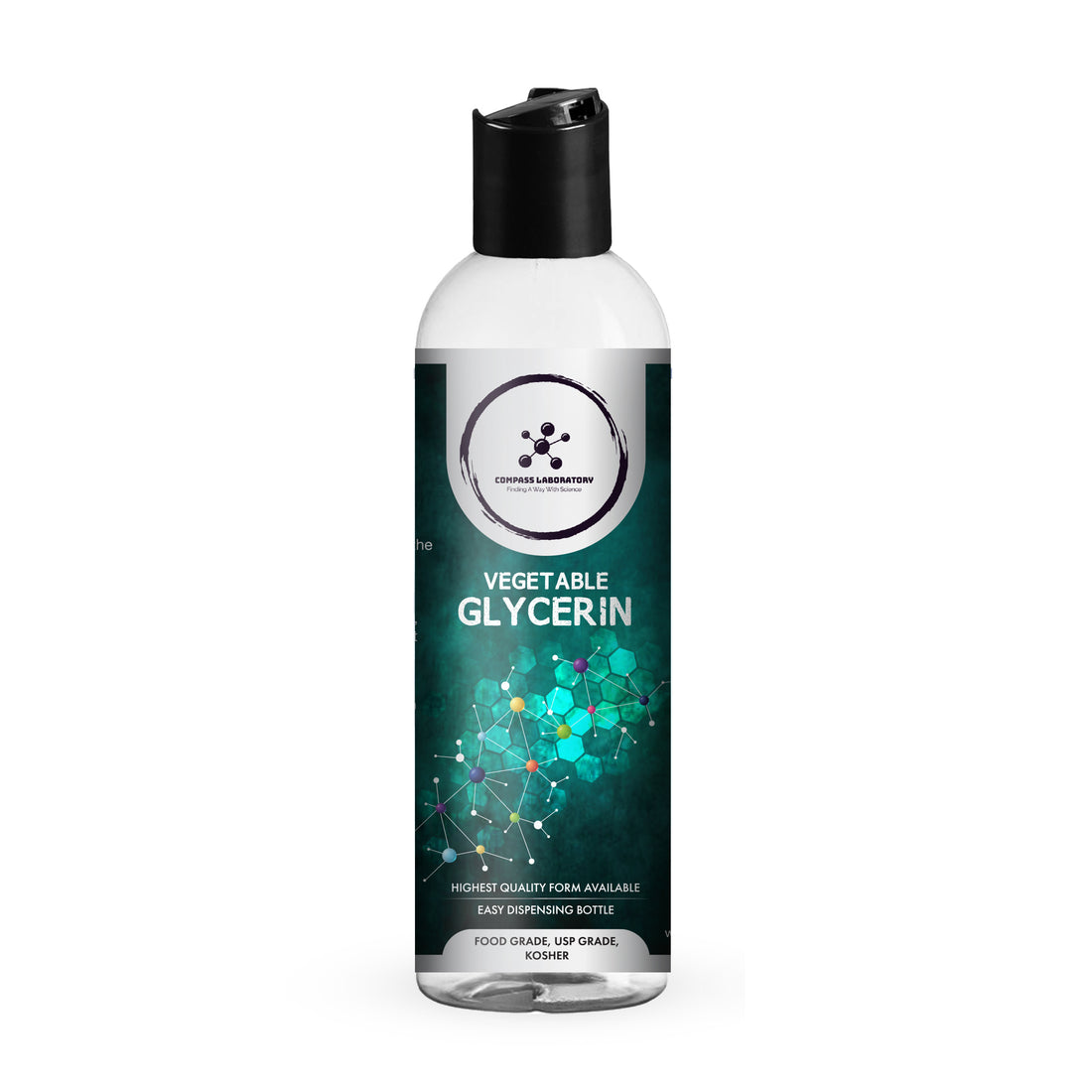
Vegetable Glycerin Uses: Skincare, Soap Making & DIY Formulas
Vegetable glycerin (also called glycerol or glycerine) is a clear, odorless, plant-derived liquid that's a staple ingredient for DIY skincare, soap making, and personal care formulation. Here's what it is, how it works, and how to use it in your own formulas.
What is vegetable glycerin?
Vegetable glycerin is produced from plant oils such as soy, coconut, or palm. It is thick, slightly sweet, and fully water-soluble. In formulation it works mainly as a humectant, meaning it draws moisture from the air and helps products hold onto water.
Common uses
1. Lotions, creams, and serums
Glycerin is one of the most widely used humectants in cosmetic formulas. Typical use levels in leave-on products range from about 2% to 10%. Higher amounts can feel sticky.
2. Soap making
Glycerin is used in melt-and-pour and liquid soap recipes to improve clarity, help dissolve sugars, and give a smoother finished bar.
3. Hair care
Added to leave-in sprays, conditioners, and hair masks, glycerin helps formulas hold moisture and reduces the look of frizz.
4. Herbal and botanical extracts
Glycerin is a common alcohol-free solvent (often called a "glycerite") for botanical extracts used in personal care formulas.
5. Aromatherapy and room sprays
Glycerin helps disperse essential oils in water-based sprays, mists, and diffuser blends. Always follow essential oil safety guidance and dilution rates.
Storage and handling tips
- Store tightly capped at room temperature, away from direct sunlight.
- Glycerin attracts moisture, so keep the cap closed between uses.
- Check the lot number and expiration date printed on your bottle.
- Patch test any new homemade skincare formula before regular use.
Shop Compass Laboratory Vegetable Glycerin 2 Pack
This article is for general educational purposes only. Compass Laboratory Vegetable Glycerin is sold as a formulation ingredient for personal care and DIY use.